
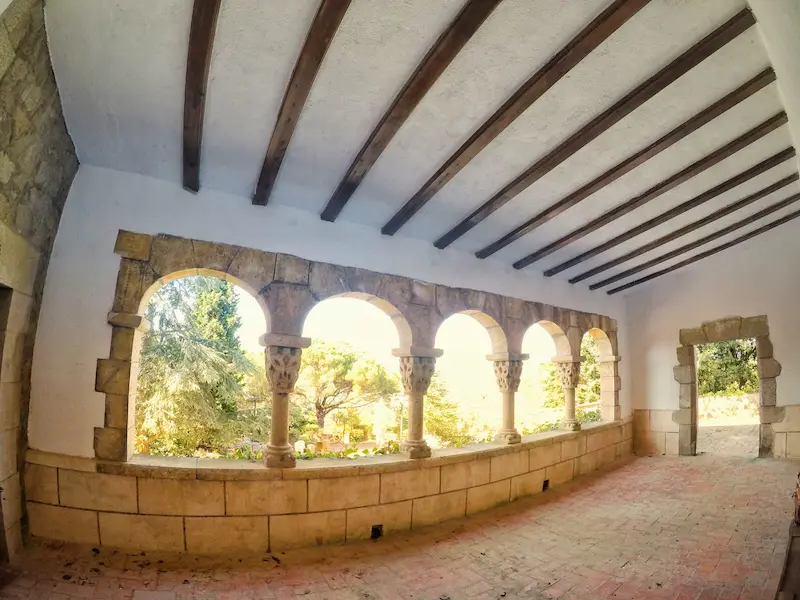
The history of the Maresme region is inextricably linked to the need for protection against a maritime horizon that was as fertile as it was dangerous. The origins of this territory date back to the ancient Roman Iluro, founded around 80 B.C. on a small coastal elevation. However, with the fall of the Empire and the arrival of the Middle Ages, the center of gravity for power and security shifted toward the hills. It is in this context, in the year 1025, that the first documentary reference to the Castrum de Mata appears—a fortress erected on the hill of Sant Onofre to organize the feudal jurisdiction of Mataró and to watch over the strategic Camí Ral, the vital artery connecting Barcelona with the north of the principality.
The Chronicle of the Castle of Mata and its Strategic Dominance over the Mediterranean
For centuries, the Castle of Mata was not only a symbol of administrative authority but also the core of an early warning system against piracy. From its privileged position, the garrison maintained visual contact with other key fortifications, such as the Castle of Burriac, and defensive towers like those of Onofre and Can Tria de Mata. This surveillance network was the only guarantee of survival for a population living under the constant threat of corsair incursions. The importance of the castle was such that, in the 14th century—under the ownership of figures like Arnau Ballester and later the monarchy in 1421—it was consolidated as the bulwark that allowed the city of Mataró to grow under the protection of its walls and its elevated gaze.
Life around the fortress was marked by a duality between spirituality and warfare. In the shadow of the castle, the chapel of Sant Miquel de Mata was erected—a 15th-century gem of Catalan Gothic architecture built over an earlier Romanesque structure—serving as a spiritual refuge for the inhabitants of the scattered farmhouses. Nevertheless, the passage of time and changes in military strategy led to the progressive abandonment of the original fortification in the 15th century. Although today only vestiges and the foundations of its ancient tower remain, the magnitude of a structure that for five hundred years was the political and defensive heart of the area remains evident, leaving a legacy that still defines the identity of Mataró’s landscape.
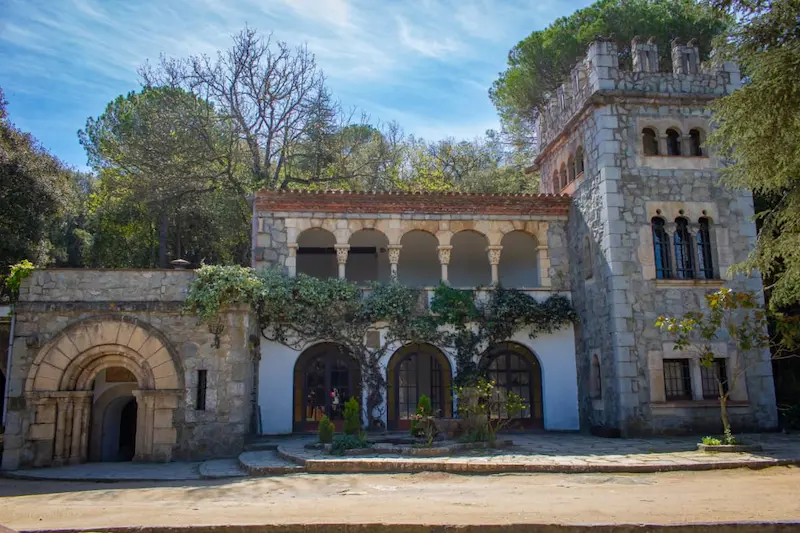
Today, the historical value of this enclave transcends the stones that still stand, integrating into a natural environment that preserves the silence and majesty of yesteryear. The Forest Park and the elevations where the ancient feudal power once sat offer an unaltered perspective of what the old sentinels once contemplated: an infinite Mediterranean that continues to dictate the rhythm of the region. Understanding the history of the Castle of Mata means understanding the resilience of a territory that knew how to transform itself from a military frontier into a space of serenity, always maintaining that elevated gaze toward the horizon that has characterized the lords of these lands for more than ten centuries.

Recent Comments